
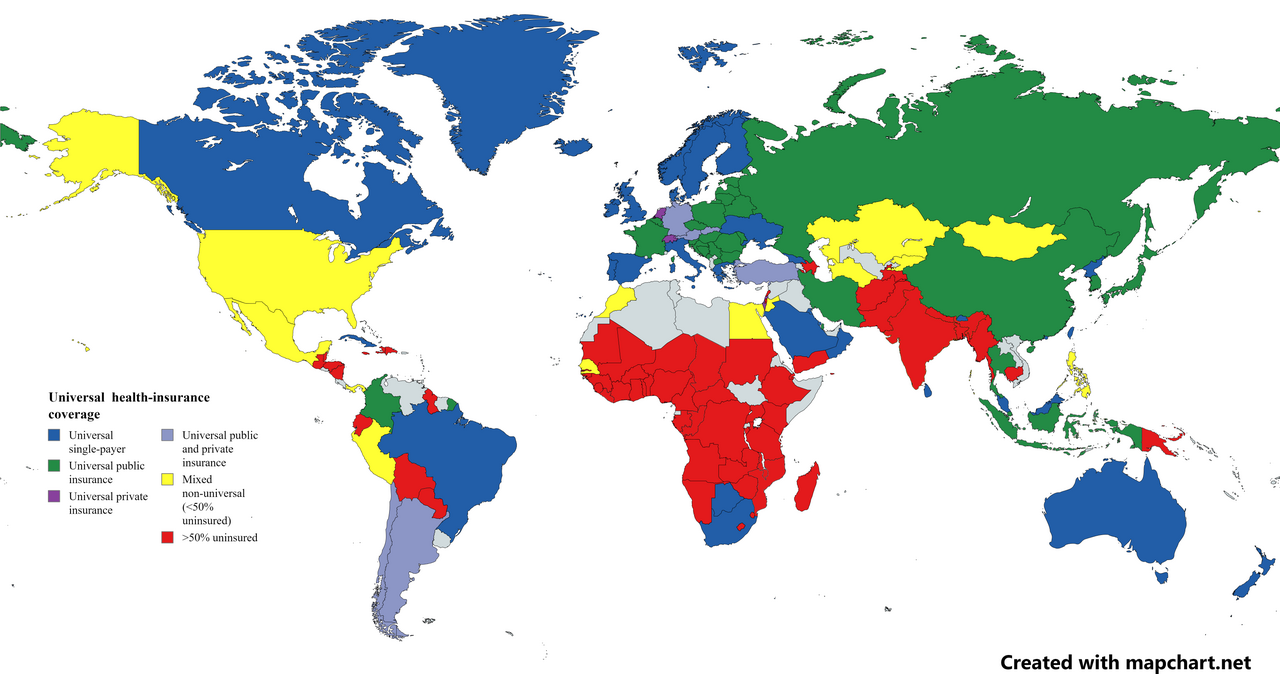

Health insurance is a critical component of modern healthcare systems, providing financial protection against medical expenses and ensuring access to quality healthcare services. Different countries adopt various approaches to health insurance based on their economic structure, government policies, and social priorities. This article compares health insurance systems in countries such as the USA and the UK, highlighting their features, advantages, and challenges.
Health Insurance in the United States
In the USA, health insurance is a mix of private and public programs. The system is primarily employer-based, where companies provide insurance coverage to employees as part of their benefits. Major government programs include:
- Medicare: A federal program providing health coverage for individuals aged 65 and above, as well as certain disabled persons.
- Medicaid: A joint federal and state program offering health coverage for low-income individuals and families.
- Affordable Care Act (ACA): Introduced reforms to expand insurance coverage, reduce costs, and prevent denial of coverage due to pre-existing conditions.
Advantages:
- Access to high-quality medical facilities and advanced treatments.
- Variety of insurance plans allowing personalized coverage options.
Challenges:
- High costs of premiums and out-of-pocket expenses for many families.
- Complexity of navigating multiple private and public programs.
- Disparities in healthcare access among different socioeconomic groups.
Health Insurance in the United Kingdom
The UK primarily relies on the National Health Service (NHS), a publicly funded system providing universal healthcare to all residents. NHS services are financed through taxation and are mostly free at the point of use. While private health insurance exists, it is often supplementary and used to reduce waiting times or access private facilities.
Advantages:
- Universal coverage ensures that healthcare is accessible to all citizens regardless of income.
- Minimal financial burden on patients for most healthcare services.
- Emphasis on preventive care and public health initiatives.
Challenges:
- Longer waiting times for certain elective procedures.
- Resource constraints and funding pressures on the public system.
- Less flexibility compared to private insurance systems in accessing specialized services.
Comparative Analysis
| Feature | USA | UK |
|---|---|---|
| Coverage | Mix of private and public programs; not universal | Universal through NHS; private insurance is optional |
| Funding | Primarily private premiums; government programs for elderly & low-income | Funded by taxation; mostly free at the point of use |
| Access | Wide access to specialized care; costly | Equitable access; some waiting times |
| Cost to Individual | High premiums and out-of-pocket expenses | Minimal direct costs for patients |
| Flexibility | High – variety of plans and providers | Limited – mainly NHS services |
Global Lessons and Implications
Both systems have strengths and weaknesses. The USA excels in providing access to advanced medical technology and personalized insurance plans but struggles with high costs and inequity. The UK offers universal coverage and financial protection but faces challenges with waiting times and resource allocation.
Other countries can learn from these systems to design health insurance models that balance accessibility, affordability, and quality. Hybrid models, combining public funding with private options, are increasingly being considered worldwide.
Conclusion
Health insurance systems are essential for financial protection and access to healthcare. The comparative analysis of the USA and UK highlights the trade-offs between cost, access, and quality. While no system is perfect, understanding different approaches allows policymakers to develop effective, equitable, and sustainable healthcare strategies for their populations
